Midsommar, Witchcraft and Fascism
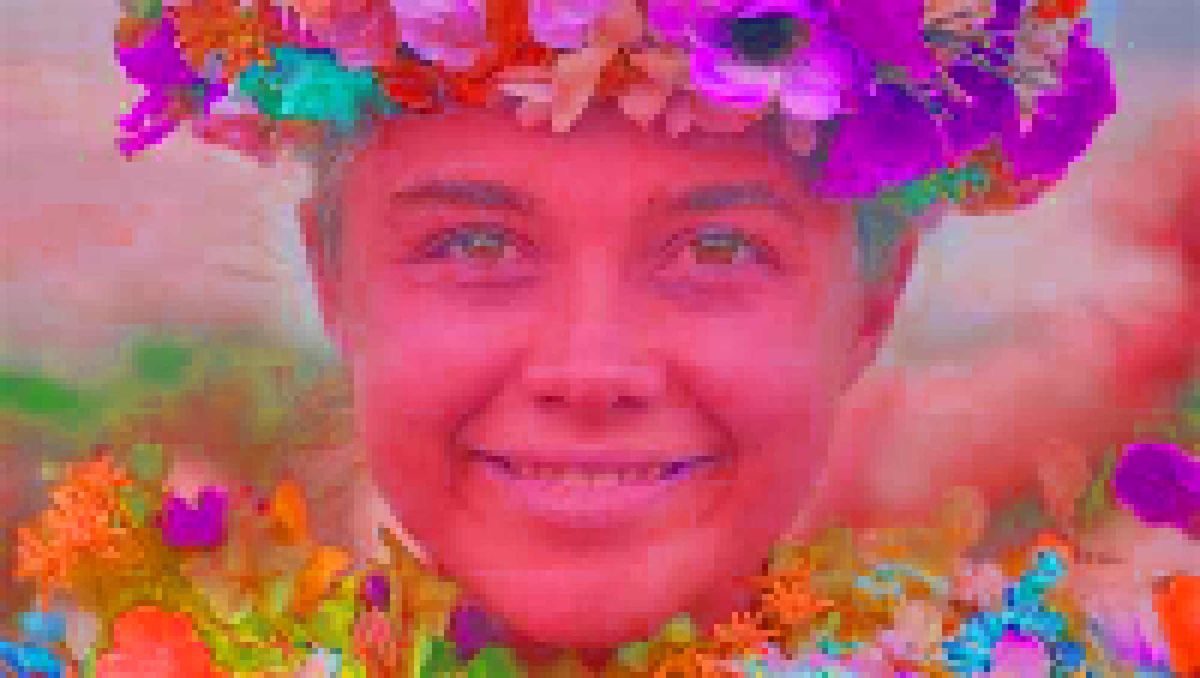
Like the people of Hälsingland, Midsommar has consumed my mind. I watched it, loved it, but it never left my mind. And I watched it again the next day. Then a week or so later, I watched it again. For me, it is an enchanting journey with a chilling ending, an ironic ending, a sardonic punchline of an ending.
And, yeah, it’s a punchline. A sucker punch.
Spoliers, obvs. Also some spoilers for Hereditary.
This post was originally me discussing the theory that Pelle killed Dani’s family. It’s a theory that has long been lurking the avenues of the internet but after watching an excellent seven-hour documentary called Midsommar - The Complete Guide (Everything Explained), I discovered that the answer to Did Pelle kill Dani’s sister, Terri? is a resounding No!
Ari Aster has said that Pelle didn’t do it, and Pelle is also shown with Christian in a different city at the time the family are discovered – which points to an unlikelihood, sure (although there’s perhaps still the notion that they were killed some time before they were discovered). But Ari Aster says it isn’t so, so I guess it isn’t so.
In many ways the film teases you to make such connections, and this might be an unintentional effect of the conspiracy that unfolds in the film, but the nature of the story implies a kind of destiny for Dani. Pelle is overly pleased Dani is going to Sweden with them, which suggests he could have planned it; when they arrive at the commune an elder says ‘Welcome home’ to Dani; there are parts where the cult speak directly to Dani; they are overjoyed that she is the May Queen, like she was supposed to be queen; etc. And I don’t think the Pelle-killer theory particularly diminishes the overarching gaslight/manipulation narrative. In fact, I find the possibility quite engaging, so Aster putting that idea to bed kinda kills the joy in that a little.
The film encourages such conspiracy thinking because of the various cinematic elements the film uses. The movie is both drama and fairytale at the same time. It presents a tale of destiny which implies everything was supposed to happen. So while the ‘destiny’ is really just fake, a tool of manipulation, the fact that the movie toys with reality, showing hallucinations, blurring the real with the unreal, means it never successfully dispels the notion that one great conspiracy could be taking place.
In a sense, those mental nudges towards a sense of purpose and destiny are precisely the mental nudges Dani receives during her indoctrination into the cult. So it’s not just Dani who is being indoctrinated. We, the viewers, are also being drawn in, encouraged to think in the ways of the Hårga, encouraged to think the events that unfold were always supposed to happen.
Not a Horror Movie
Much of Midsommar works on playing or subverting horror movie tropes. Because of this, so much of the events are not shown to the viewer. Yet we know pretty much what happens to each character. For saying this is a long movie, and considering its reasonably slow paced, it is actually very economical with its drama. The drama packs a real punch, and so much is revealed in just a few blank faces or silence. Each line holds weight.
The movie directs the viewer very nicely. You look at and hear exactly what you are meant to, yet it never feels particularly forced or obvious. And it is such a beautiful movie to look at. I could watch the May Pole scene again and again forever.
The biggest draw for me is how the movie conveys a subtle manipulation on its characters. One of the most powerful scenes for me is the breakfast scene after four of the newcomers have been disposed of and there is only Dani and Christian left.
What makes the scene so compelling is how neither Christian or Dani are not particularly concerned with the disappearance of their friends. So normalised have the workings of the cult become that the bleeding obvious no longer raises alarm bells for them. Midsommar isn’t so much about going through the obvious horror movie tropes. The movie uses those tropes that are familiar with the viewer, yet presents them in an different way. The horror is us, the viewers, watching how the characters as so at ease being amongst a cult of killers.
7hr Doc
I won’t link to the video essay Midsommar - The Complete Guide (Everything Explained) because it’s on youtube and fuck Google. But I’m sure you’re capable of searching for it yourself, I have faith in you. It is a very well researched documentary and very much worth watching. I recommend it highly.
In some ways, however, I think the video essay researches too much into what everything means in the film, so removes one of the things that makes great art great: that is the viewers’ unique interpretations and readings. By saying ‘this part means this’ you take away that magical interactive nature of art: the dialogue between artist and viewer. While I am always interested to learn more about art I love, I’m also inclined to lean more towards the fan theory of things, to interpret something mostly on the what is presented to the viewer. All art references the external world to some degree, but if something in an artwork is ambiguous, or the references so obscure most people won’t understand them, I’m not sure it matters whether you know it’s ‘correct’ meaning or not.
Neutrality of Characters
What makes Midsommar so great, and one of Ari Aster’s strengths is to show characters for who they are, yet make their decisions either understandable or at least acceptable. That is, each character has a flaw and it is not necessarily the malice of one person that creates drama but the flaws of each character playing off each other.
So while Christian is a terrible boy friend, full of passive-aggression and gaslighting, one of the important features in the narrative is that Dani too has flaws – or at least one main flaw. Her main flaw is the self-doubt that compels her to try to keep Christian despite their relationship clearly failing. It is this character trait that means Dani is primed for manipulation, which is then exploited by the Hårga. So while her relationship with Christian is crumbling, the cult is there, ready to take his place.
The fates of the other outsiders is also something portrayed as understandable. While none of the characters deserves death, they all do things that offend the Hårga, thus making their deaths seem entirely logical.
A good example of this neutrality of characters is in Aster’s movie Hereditary. The character Annie is both a victim and an aggressor at the same time and it is clear that mental trauma and abuse has created who she is. At no point watching that film do I hate Annie, but at the same time you can see how some of the things she does and says are not always thoughtful.
There’s a moment when Annie is explaining she has unleashed some kind of spirit to her husband, Steve, after he has visited the attic to see the headless corpse there. At this moment, Annie is aware of the situation she is in and tries to explain to Steve. But Steve’s reaction is entirely understandable as suppressed feelings come to the fore and he turns against her. He is wrong to turn against her and to not listen to her, but you complete understand why he choses not to. It’s so beautifully done where you entirely understand where each character is coming from and all you can do is watch while the situation for them gets worse.
I think what Ari Aster does so well is to convey a story where lots of elements create a desired result, and while some characters are more to blame that others, none of it is the work of just one character. Both Midsommar and Hereditary have a cult-like manipulation theme in which forces around and exterior to the main characters work their way to achieve their goals. So seeing it like this, you can understand how each character’s flaws might be portrayed as acceptable or even desirable. The real (anti-) hero in each of these movies is the fascistic cult.
Director’s Cut
For the record I think the original theatrical release is a better edit than the director’s cut. While there are a few extra moments in the director’s cut that reveal more of the various characters, and show more of Christian’s toxic personality, there is an extended night time scene which I feel breaks the beautiful, almost entirely daytime element of the movie. It also contains an extra ritual with a boy, which is interesting but not an essential part of the movie. And There is an argument between Christian and Dani that I feel is way too explanatory. During the argument, Dani expresses her wish to leave, to which Christian tells her he’s staying.
I also don’t like the way Dani seems too aware of her own character flaw. It is clear Dani is desperate to stay with Christian and in denial. I feel that the scene where she admits to her clinginess is just too revealing, too much stating what the narrative and drama already reveals in a much more sophisticated way. The shorter version creates a better tension of uncertainty that I find enjoyable. It leaves the viewer more uncertain of the character’s next move, which enhances the creeping sense of horror.
If Dani really had alarm bells ringing, she would perhaps be more desperate to leave. Being aware that Christian no longer wants her should make her free to walk away. There are lots of reasons why she wouldn’t just leave on her own, but I think the narrative works just that bit better when she doesn’t so openly express her awareness of their relationship. In that case, the tension between awareness and self-doubt is much more delicately played out.
Things the movie does badly
While a lot of the drama is brilliant – and the acting superb – I do think some scenes are a little on-the-nose and a little flat. You know, I *love* this film but there are parts that I think could be better.
It never occurred to me that Mark was skinned and one of the Hårga (I think Ulf) is wearing his skin. I didn’t realise this until I read the plot outline on Wikipedia. I don’t think this comes across very well in the movie, especially because the scene includes a deformed inbred character. I just thought I was looking at another mutant, especially because there is some loud groaning at the same time. Apparently the groaning is made by Josh who has just been hit on the head.
To me this scene is very unclear except for the viewer learning Josh has been disposed of.
Dani’s parents and sister also make a comeback in the movie, appearing at the end. And while I noticed the strange people looking at her, I didn’t recognise Dani’s parents. That is because we don’t see them upright until that point and we don’t spend any time with them as characters. But they are there, nonetheless.
National Flag
The use of colour is very striking in Midsommar, each colour symbolic of something. It never occurred to me until watching the 7 hour video essay that the colours blue and yellow were chosen because they are the colours of Sweden’s national flag. I think I didn’t realise because in some ways it’s quite on-the-nose. However, I don’t think it’s important that those particular colours were used, except they conveniently do a great job symbolising the winter/summer cycle.
Midsommar conveys cult-like living, which can be applied to religious cults as well as the allure of fascism. So while there is a direct reference to a national flag, there is a reference also to temporality; the yearly cycle, the continuation of things, the rise and fall of movements. Blue and yellow also symbolise life and death but these two elements seem to be confused in the film so yellow also means death and blue life. But this makes sense when you consider that midsummer is the beginning of the end of the year. Although it’s summer, from that day on the days get shorter and so begins a decline, a death.
The use of blue also represents the place the outsiders left behind – the real world – which is why the outsiders and those returning from outside the commune tend to wear blue. So in that sense it is the black and white Kansas opposed to the colourful Oz.
There seems to be two uses of blue. One is the dark blue and the other is a paler blue; both particularly neutral in tone. There seems to be a vague use of the younger characters marked for death wearing darker blue while the older characters marked for death in paler blue, but this is not always the case. It seems to me that the darker blue is usually used to draw attention to characters and to visually mark them as separate in some way and that separation is different according to each scene. The paler blue of the cult elders might just be so they don’t look too different to the rest of the Hårga who are dressed in white, while the outsiders are shown in darker tones and are distinctly separate.
Unexplained
Like the Pelle-killer theory, there are some other unexplained elements of the movie that really intrigue me, and I would say these are a symptom of the carefully thought-out narrative.
One part that has always intrigued me is how Pelle’s brother Ingemar describes how he met Connie and Simon. He describes himself as dating Connie when he first met Simon, to which Connie corrects him saying, it was one date and she didn’t know it was a date. Ingemar than changes his story to say they decided not to date. Simon then says that they asked Ingemar to officiate their wedding. Connie asks ‘Really?!’ and Simon replies ‘No,’ which gets a laugh.
What I find intriguing is why this character trait of Ingemar was included. I guess it shows how the Hårga are awkward and lack in social skills with outsiders (implying Pelle is exceptionally adept) but it does raise the question of what sort of relationship Ingemar has with Connie and Simon. It appears they don’t particularly like him – or they see him as a bit of a joke – and that also raises the question why they agreed to take the trip to his commune with him.
It’s not a question of this scene jarring or not fitting with the rest of the movie. It fits perfectly, but it leaves a few unanswered questions and I feel the movie could have provided a bit more information.
Another question is regarding the past May Queens who are revealed as a series of photographic portraits, with Dani having her photo taken as soon as she becomes May Queen. We are told the special midsummer festival comes only every 90 years, but we see lots of photos of May Queens, telling us they probably have a May Queen every year, as you’d assume they would. Photography is not all that old, so we know those photos aren’t one every 90 years because the technology didn’t exist 150+ years ago. Yet the film doesn’t really say much about the May Queens. No past May Queen is pointed out to the outsiders, for example.
So while the wall of photos is probably something very mundane like a simple record of past May Queens, there is also the possibility that past May Queens are also sacrificed along with the other tributes.
The movie doesn’t confirm this, and I’m sure Aster would say that is not what is happens, but to me it doesn’t seem entirely out of Hårga character to also set fire to the May Queeen once she has been elected.
I wonder about it, but I’m sure that’s not what the film is saying.
Witchcraft
One criticism I have of the movie is that is portrays paganism as cultish, murderous, and savage. I’m not religious but I am aware of the tropes used against traditional folk thinking that led to the witch hunts of the middle ages. It might not be such a thing any more but anti-pagan sentiment is tied with misogyny and the killing of women.
Creepy Paganism is a bit of a trope, most notably in the movie The Wicker Man. But having said that, I just adore Midsommar. It’s perhaps a shame it links beautiful pagan-like symbolism and ritual with creepiness and murder. The weirdness is everything wonderful about this movie. It’s the awkwardness and the constant unsettlingness that drives the movie.
It is a shame Midsommar relies on pitching paganism as Other and weird and the film makes a clear distinction between the Hårga and the Christian world – marked clearly by the character name Christian. It is a trope for pagans to be presented as weird and evil and it is a trope that comes straight from a predominantly Christian, proto-capitalist mindset. And it hits an especially sour note when you consider the many crimes to humanity the Christian church has committed or enabled: The Witch Hunts, Settler Colonialism, The Crusades, etc.
The witch hunts and the control of women’s bodies (which is ongoing today) is just one part of the exploitative traits that brought to us capitalism. Capitalism is entirely exploitative and was built on exploitation and it is when capitalism is in crisis that fascism rears its head. Fascism is a form of capitalism. So it really should be the Christian world portrayed as the culture of manipulation and death, not the pagan world.
It has been noted that fascism is really the phenomenon of the Western world inflicting upon it’s own (European) people what it has been inflicting upon the rest of the world (brown people) for centuries via colonialism. Fascism is the act of bringing the violence and subjugation to Western nations. Midsommar doesn’t touch on colonialism – not that it should – so it never makes this point about fascism. In a sense, the film creates a distinction with the death-cult of fascism from the ‘normal’ capitalist, Christian world, presenting fascism as something weird and otherworldly like paganism. The link between paganism and fascism does come from the Nazis’ interest in it and that interest means they also psychologically separated themselves form the Christian, Western world to present themselves as something ancient and Other.
The reality is that fascism is very much part of the Western (Christian) world. It is the Western world that created it, and that is why fascism never really went away. If anything, the pagan world is the antithesis of fascism because the pagan world is in conflict with capitalist ideology.
In the video essay Midsommar - The Complete Guide (Everything Explained) the author does suggest that the Hårga cult is just all made up, and this is possibly implied by the paint smears from the inbred lucid thinker who supposedly writes their doctrine before it’s translated. It fits that the Hårga is just a modern made up cult but it isn’t made completely certain that this is the case. The notion that they are some recent, pretend cult is lessened by Josh’s academic interest in them. If it was all a nonsense cult Josh would perhaps have realised that early on.
There are suggestions that Josh realises it’s all a scam, but again there’s not much solid. For me, the notion that the Hårga are just Nazis dressed up isn’t particularly appealing to me. The idea that they are an old group of people who have long practised their beliefs, and who in recent times developed sympathies and shared beliefs with fascism, or had always held fascist beliefs, works better for me. I think there’s something more terrifying about a cult that has been around for centuries doing the things they do. A modern pseudo-cult doesn’t work for me. It cheapens it.
But bearing that in mind, a fake cult means that this movie isn’t actually an attack on paganism, because the Hårga aren’t real pagans. This may or may not be the case but I doubt most people watching would think that deeply about it, so the takeaway for them would be: Paganism = Weird, creepy killers.
But whatever the case, the movie shows that the continual creep of fascism, tied to unsettling, alien rituals, and this is a commentary on the integral fascism in humanity – how we’ve always had it. These people are not weird and Other; they are Westerners in disguise. European fascism was always there for brown people. The horror (for the European characters in the movie) is when fascism comes for Europeans.
Midsommar is about Europeans facing their own inherent fascism.
Over and out for now, guys!
xxx